
Piranesi’s Carceri: He Sold Rome to Tourists, Then Drew Prisons That Can’t Exist
Artwork Details
Name of Art
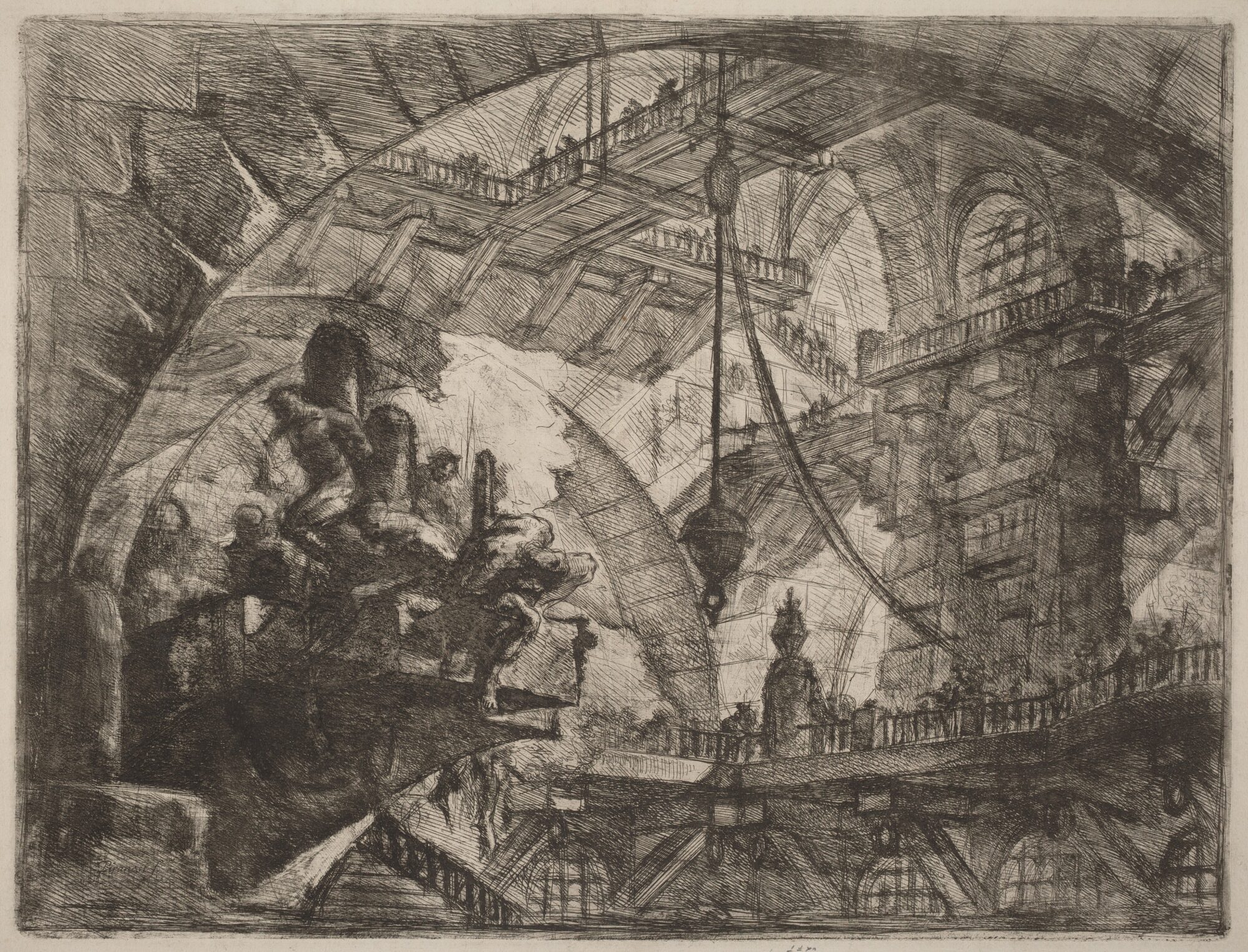
Prisoners on a Projecting Platform (Carceri, 1750/1758)
Artist
Giovanni Battista Piranesi
Art Type
Etching, engraving, sulphur tint or open bite, burnishing
Year
1750/1758
Location
–
Piranesi’s Carceri (Imaginary Prisons) are a series of etchings by Giovanni Battista Piranesi showing vast, impossible prison interiors: staircases climbing into darkness, bridges that lead nowhere and tiny figures lost in enormous spaces. Prisoners on a Projecting Platform is one of the plates.
Before the Carceri: the souvenir seller
Piranesi trained as an architect in Venice and moved to Rome, where he made his living from the Vedute di Roma, large etched views of the city’s monuments. Wealthy travellers on the Grant Tour Bought them as souvenirs. In effect, Piranesi was the architectural visualizer of his day, selling the image of a place to people who had paid to experience it.
The Piranesi Carceri: the dreamer
The Carceri are the opposite. The first edition appeared around 1750. However around 1761, Piranesi reworked the plates and made them darker and dense. Nothing in them could be built. The perspective shifts, the scale is impossible, and the architecture becomes an emotion: awe, fear and confusion.
Why the Piranesi Carceri still matter?
Piranesi shows that the same skill can sell a place and invent one. Today’s real estate renders do the first job well. Few do the second: making people feel something about the space. The best launch films and brochures need both accuracy and imagination, the two halves Piranesi’s career.
Piranesi’s Carceri and the modern imagination
Piranesi’s Carceri have influenced set designers, filmmakers and architects for more than two centuries. Their endless stairs and impossible bridges echo in fantasy films, game worlds and stage design. The lesson for anyone designing a space is simple: an image that makes people feel something travels further, and lasts longer, than any accurate plan.
See it
National Gallery of Art, Washington, Rosenwald Collection (1946.21.395). NGA holds over 500 works by Piranesi.
What are Piranesi’s Carceri?
A series of etchings of imaginary prisons, first published around 1750 and reworked, darker, around 1761.
What were the Vedute di Roma?
Piranesi’s etched views of Rome, sold widely to Grand Tour travellers as souvenirs.
Did the prisons in the Piranesi Carceri exist?
No. They are invented spaces that could never be built.