
Is AI Art Real Art? A Lesson From an 1804 Portrait Machine
Artwork Details
Name of Art
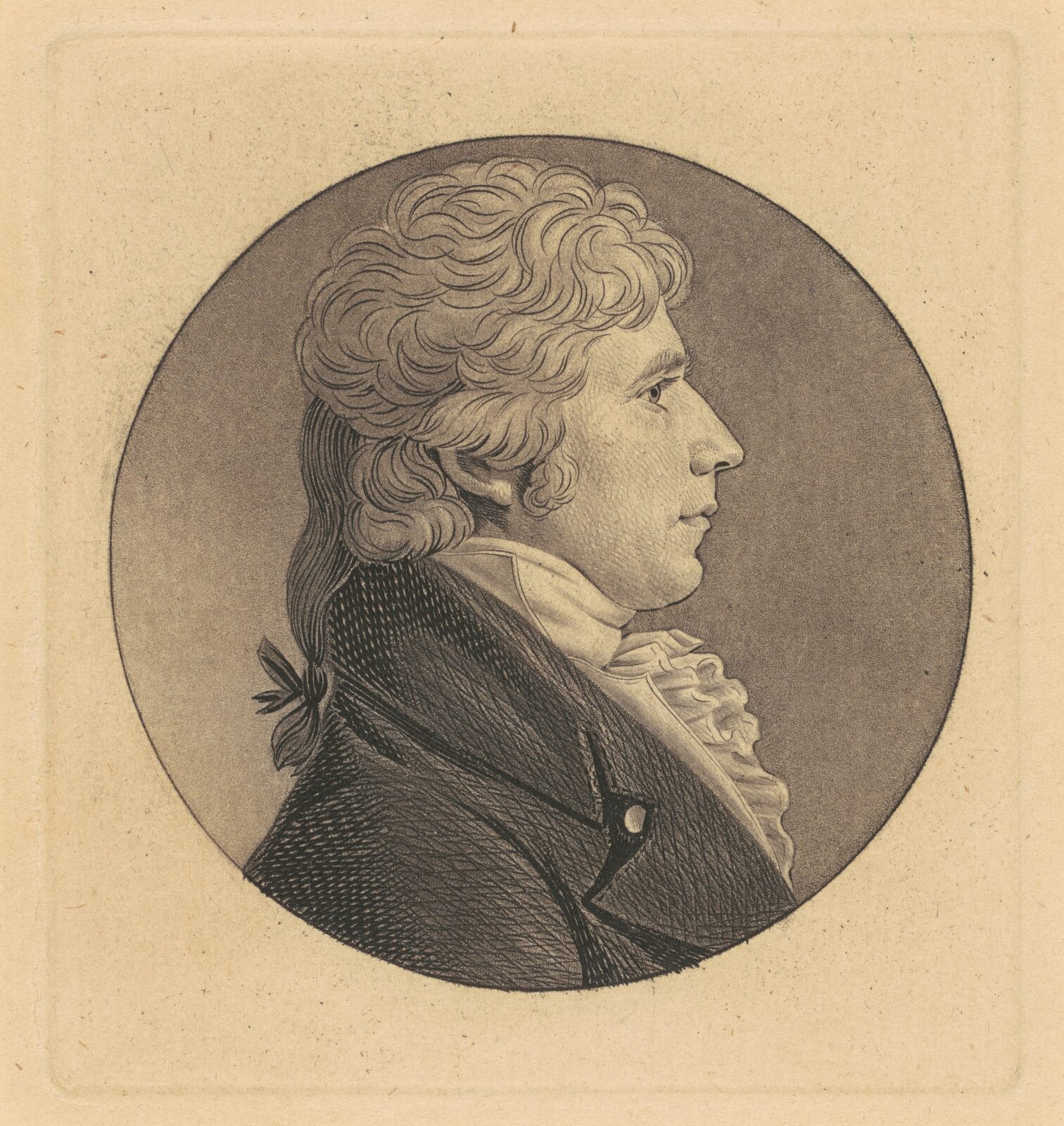
James Campbell
Artist
Charles B. J. Févret de Saint-Mémin
Medium
Engraving in black on laid paper
Year
1804
Location
–
Is AI art real art? It is a new version of an old question. In the early 1800s, the French-born artists Charles Balthazar Julien Fevret de Saint-Memin made hundreds of portraits in America using a tracing machine called the physiognotrace. The machine captured the outline and then the artists made it a portrait.
How the physiognotrace worked?
The physiognotrace was a mechanical drawing device that let an artist trace the exact outline of a sitter’s profile at life size. Saint-Memin used it to make a large drawing, usually in charcoal on tinted paper, then finished the face by hand. He reduced the image and engraved it on small copper plate, so the sitter could have prints made.
A portrait as a product
Saint-Memin sold this as a package: the life size drawing, the engraved plate and a set of small prints for the sitter to give to friends and family. His sitters ranged from merchants to politicians, including Thomas Jefferson. James Campbell (c1804) is one of the hundreds of profiles he made.
So, is AI art real art?
New tools always provoke the same fear: that the machine will replace the artist. The physiognotrace did not. It made portraits faster and more accessible, and the artist’s eye still decided what mattered. AI is the same. Asking “is AI art real art?” misses the point that the art is in the choices.
See it
National Gallery of Art, Washington, Corcoran Collection (2015.19.1584.29.7). NGA holds over 900 works by Saint-Memin.
Is AI art real art?
Like earlier tools, AI changes how images are made. The artistic decisions, story, taste and intent, still come from people.
What is a physiognotrace?
A mechanical device used around 1800 to trace the outline of a person’s profile at life size.
Who was Saint-Mémin?
A French-born artist who made hundreds of profile portraits in the United States in the early 1800s.