
Why Is Old Art Religious? 70% of Early Paintings Were Paid For to Reach Heaven
Artwork Details
Name of Art
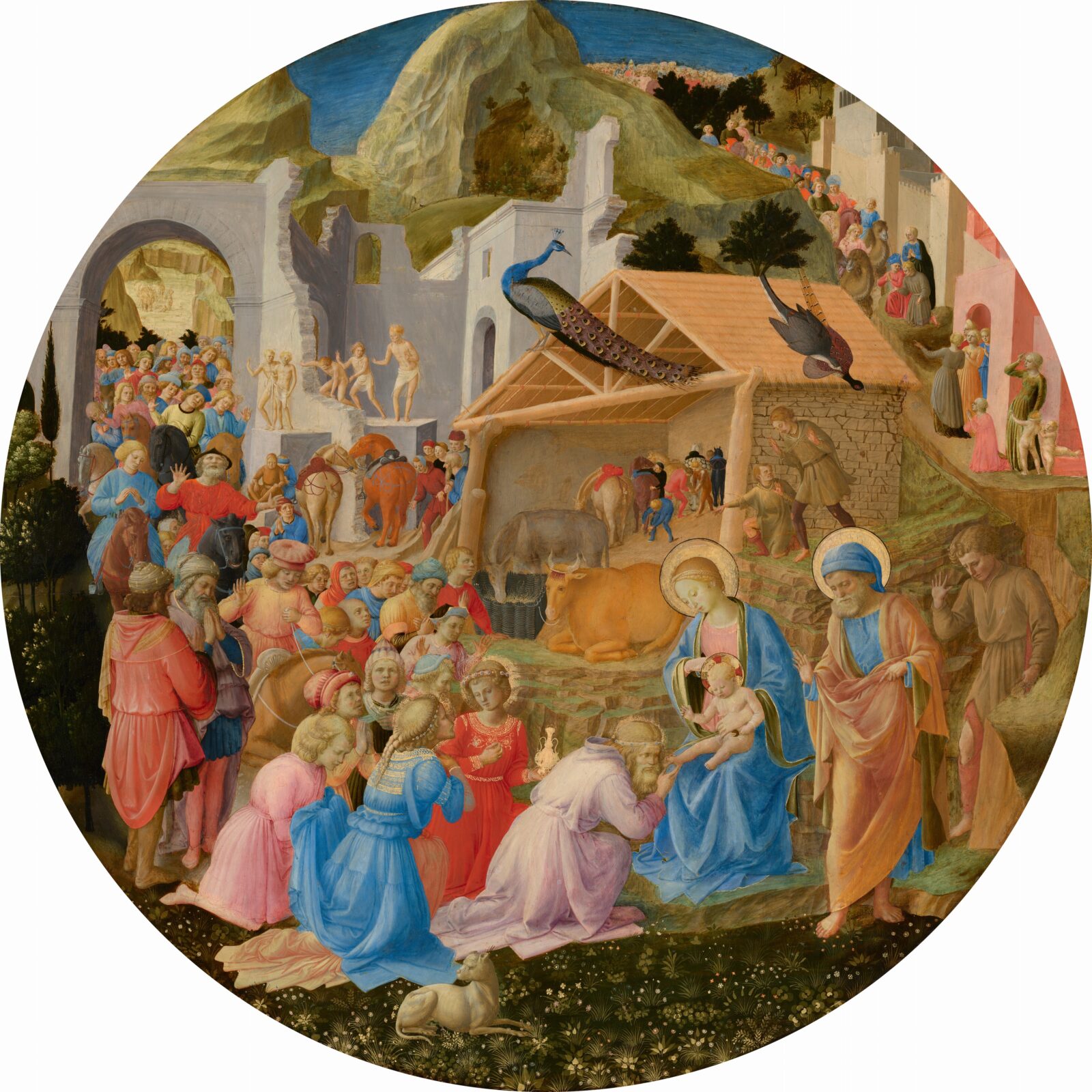
The Adoration of the Magi
Artist
Fra Angelico & Fra Filippo Lippi
Art Type
Painting
Year
1440/1460
Location
Italy
Why is old art religious? Because the people who could pay for paintings before 1500 were churches, religious brotherhoods and wealthy families who wanted to show their faith and secure their reputation, in this life and next. In the National Gallery of Art’s open collection, 173 of the 246 paintings made before 1500 (About 70%) have religious themes.
The painting: a round crowd moving towards a child
The adoration of the magi is a tondo, a round panel. Fra Angelico began it and Fra Filippo Lippi completed it, two friar-painters f 15th century Florence. Kings, horses, courtiers and on lookers stream through the streets. This tondo is widely identified with a round Adoration listed in a 1492 Medici palace inventory, valued among the household’s most precious paintings.
The message was clear. The richest men in Europe paid to be seen with kings who kneel before something greater than wealth.
Why is old art religious, and why does it still matter?
Patrons have always paid for meaning, not just objects. A painting like this was a statement of belief, status and belonging at once. Brands do the same today when the commission work that carries a story beyond the product.
See it
National Gallery of Art, Washington, Samuel H. Kress Collection (1952.2.2). Open access image.
Why is old art religious?
Before 1500, churches and wealthy religious patrons were the main buyers of art, and religious images expressed both faith and status.
Who painted The Adoration of the Magi tondo in Washington?
Fra Angelico began it and Fra Filippo Lippi completed it, in Florence around 1440 to 1460.
What is a tondo?
A circular painting or relief, popular in 15th-century Florence.